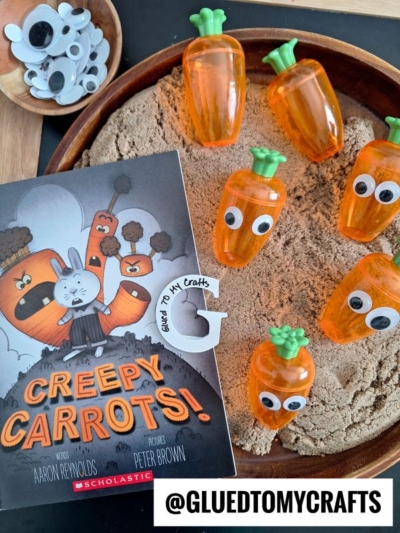
Do you have a stash of plastic carrot-shaped eggs sitting in your holiday storage bin from last spring? Or maybe you just love the hilarious and slightly spooky picture book, Creepy Carrots! by Aaron Reynolds and Peter Brown?
If you nodded yes to either, you are going to love this simple DIY activity.
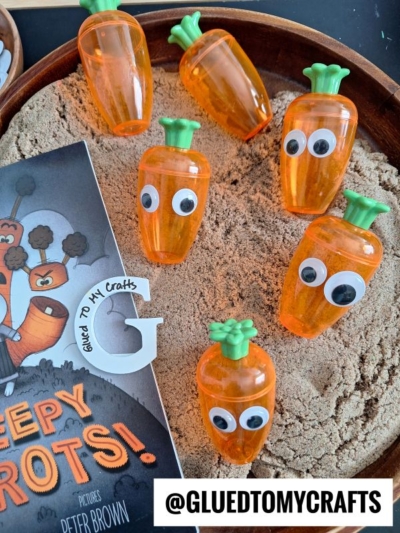
Story time is a magical part of childhood, but sometimes little hands need to be busy while little ears listen. This “Creepy Carrots” sensory bin brings the story to life right on your table. It transforms passive listening into active, tactile play. The best part? It takes about five minutes to set up and costs next to nothing if you already have the book and a few craft basics.
Here is how to turn those ordinary plastic eggs into Jasper Rabbit’s worst nightmare (in the most adorable way possible).
Materials Needed
You don’t need a fully stocked craft room for this one. Gather these supplies:
- The Book: Creepy Carrots! by Aaron Reynolds and Peter Brown.
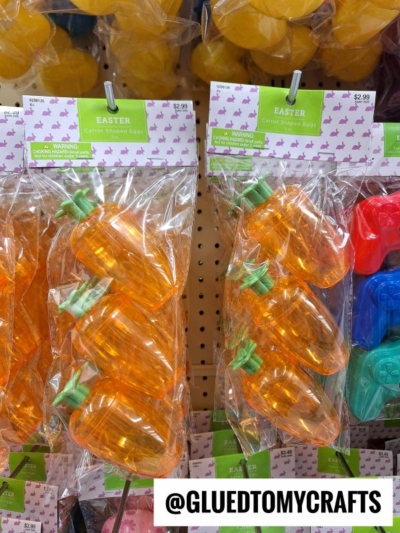
- Plastic Carrot Containers: You can usually find these in the Easter section of most stores, or you might have leftovers from last spring.
- Googly Eyes: The self-adhesive ones are easiest, but glue dots work well too. Grab various sizes for extra personality.
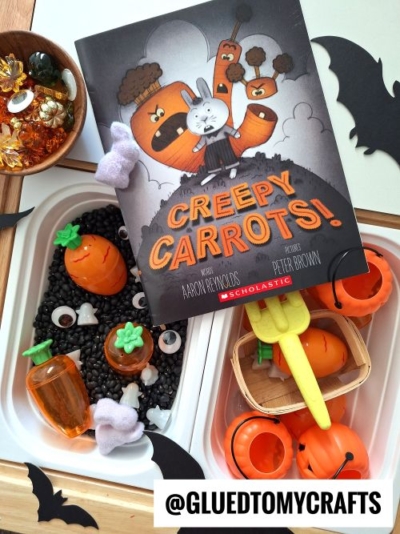
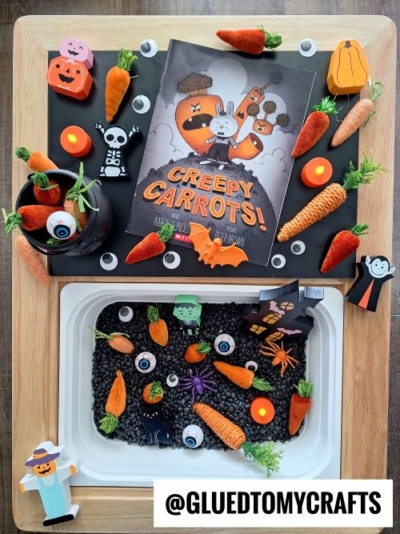
- Sensory Bin Base: Kinetic sand is fantastic because it packs well, mimicking garden soil. Regular play sand, black beans (for a “spooky” night vibe), or even dyed rice work great too.
- A Container: A wooden tray, a plastic bin, or even a baking dish to hold your sensory material.
- Optional: Tongs or scoops for digging.
Step-by-Step Instructions
Ready to make some vegetables that stare back? Follow these simple steps.
Step 1: Clean Your Carrots
If your plastic carrots have been in storage, give them a quick wipe down. Ensure the surface is dry so the adhesive sticks properly.
Step 2: Add the “Creepy” Factor
This is the most important step. Take your googly eyes and stick them onto the orange part of the carrot container.
- Tip: Don’t aim for perfection! Place the eyes slightly unevenly or use one large eye and one small eye. This gives the carrots a manic, “creepy” expression that matches the illustrations in the book.
- Variation: If you want to convey different emotions, you can use a black sharpie to draw eyebrows above the googly eyes—angry, surprised, or sneaky.
Step 3: Prepare the Soil
Pour your chosen sensory material (sand, beans, or rice) into your tray or bin. Fill it deep enough so that the carrots can be partially buried.
Step 4: Set the Scene
“Plant” your creepy carrots into the sensory bin. You can bury some deep so only the green tops show, and leave others resting on top, staring out. Place the book next to the bin as an invitation to play.
How to Play: Story Time Ideas
Now that your bin is ready, here are a few ways to engage your child:
The “Stalking Carrots” Retell
As you read the book aloud, have your child act out the scenes. When the carrots start following Jasper, have your child move the plastic carrots around the bin. When Jasper builds the fence at the end, they can build a wall using the sand.
The Great Carrot Hunt
Bury all the carrots completely in the sand. Challenge your child to “harvest” them using tongs. This is excellent for hand-eye coordination. As they pull each one out, ask them, “Is this a regular carrot… or a CREEPY carrot?”
Emotion Matching
If you made carrots with different expressions (using eyebrows or eye placement), ask your child to find the “angry” carrot or the “confused” carrot. Talk about why Jasper felt scared and why the carrots were actually happy at the end of the book.
Conclusion
Bringing books to life doesn’t require expensive props or hours of preparation. With a handful of plastic eggs and some googly eyes, you can turn a regular afternoon reading session into an interactive adventure.
So, grab your glue, find those carrots, and get ready for some “creepy” fun! Just don’t be surprised if you start checking behind you when you walk past the vegetable crisper later tonight.
RELATED —> Pretend Carrot Garden – Sensory Bin Idea
With a little imagination, even the simplest materials can spark big moments of creativity and laughter. Whether you’re reading together for the hundredth time or exploring the story’s twists for the first, this playful project is sure to make memories that last. Here’s to more stories, more giggles, and a whole lot of “creepy” fun!
Bringing books to life doesn’t require expensive props or hours of preparation. With a handful of plastic eggs and some googly eyes, you can turn a regular afternoon reading session into an interactive adventure.
So, grab your glue, find those carrots, and get ready for some “creepy” fun! Just don’t be surprised if you start checking behind you when you walk past the vegetable crisper later tonight.